
WTP Services
Supporting Customers Across the Evolving Commercial Spaceflight Ecosystem.
Services for PAM Customers
Flying with a PAM provider on PAM-5,6,7?
Advise | Advocate | Steward
Independent, client-first representation for sponsoring agencies & astonauts flying with any PAM provider. Drawing on deep, firsthand experience from the PAM provider side, WTP serves as sole advocate & advisor, focused exclusively on stewarding customer decisions and protecting mission objectives.
Inform | Empower | Guide
WTP Space was founded by key pioneers at Axiom Space who developed the Ax-1 to Ax-3 Private Astronaut Missions (PAM), innovating & defining the PAM model in use today. WTP empowers customers with this expert insight from the PAM provider perspective to guide them through the full mission lifecycle.
Align | Deliver | Protect
While PAM providers must balance organizational & partnership obligations, WTP positions itself to ensure that PAM customer interests remain a primary focus of the PAM provider.
WTP’s expert advisory establishes alignment, delivers informed oversight, and enforces accountability. WTP protects your interests so you have confidence throughout.
Network | Negotiate | Develop
PAM Negotiation Assistance - Assisting in cost evlautaion, developing strategies, and advising on or directly supporting negotiation.
National Research Networking - Soliciting national scientific institutions and research organizations to participate in orbital science, along with wider national outreach and mission particpation.
Mission Portfolio Develpment - Sheperding PAM customers through development of their astronaut's on-orbit mission complements (science, outreach, commercial activities). Make the most of your time in orbit!
If I am flying with another PAM provider (PAM-5,6,7), why do I need representation?
A Private Astronaut Mission (PAM) is one of the most complex and consequential journeys an individual can undertake—operationally, professionally, and personally.
WTP provides independent, client-first representation for private astronauts flying with any PAM provider. Drawing on deep, firsthand experience from the provider side, WTP serves as a dedicated advocate focused exclusively on protecting and advancing the astronaut’s mission objectives from contract execution through post-flight completion.
Beyond training, crew integration, physical preparation, and the flight itself, a PAM requires coordination across government agencies, commercial space companies, research institutions, media organizations, STEM partners, and multiple service providers. Each stakeholder plays a critical role, but priorities, timelines, and incentives do not always naturally align. Absent an independent role focused on governance from the astronaut’s perspective, misalignment can emerge across interfaces—affecting decision clarity, execution efficiency, and mission outcomes.
Additionally, private astronauts are expected to help define mission objectives, contribute to planning and support documentation, participate in research and media coordination, and engage in key mission-execution decisions. Independent representation ensures these responsibilities remain coherent, aligned, and well-governed throughout the mission lifecycle.
WTP does not replace mission providers or operational authorities. While providers must balance organizational and partnership obligations, WTP exists to serve as the private astronaut’s sole advocate and governance layer—providing continuity, alignment, and informed oversight to protect mission objectives, decisions, and outcomes from contract execution through post-flight completion.
With WTP, Private Astronauts Gain:
- Alignment across providers, NASA, and mission partners
- Accountability to ensure commitments remain on track
- Continuity from contract execution through post-flight closeout
- Informed oversight supporting mission safety and readiness
- Guidance through planning milestones, decision points, and required deliverables
- Confidence that mission objectives remain protected end-to-end
WTP provides governance, advocacy, and continuity — so private astronauts can focus on mission success, knowing their interests are protected at every stage.
Full Private Astronaut Missions
WTP-1 Early Access

WTP-1, targeted for 2028, is our independently led commercial mission built for the emerging post-ISS Artemis era in partnership with lead industry providers. Early access open now.
WTP-1: A post-ISS Artemis era option, today
WTP supports commercial human spaceflight across today's missions to the ISS, while simultaneously expanding independent commercial opportunities beyond NASA-sponsored mission models.
WTP-1 is designed to bridge today's private astronaut missions with tomorrow's post-ISS commercial LEO platform options through an accessible, future-ready mission architecture that is 100% commercial. Available without waiting for next-generation commercial space stations to become fully assembled or viable through government-funded anchor tenents.
WTP-1 (2028) provides:
- A post-ISS Artemis era mission architecture
- The largest habitable volume in LEO
- A commercial laboratory by the leading industry provider
- No schedule risk posed by priority visiting vehicles
- No lost days due to logistics or on-orbit requirements
- No access restrictions on orbital platform
- Experience with future workhorse of the Artemis era
- Substantially lower estimated cost than ISS-based PAMs
🔒 WTP-1 Mission early-access page request. 🔓
Private Astronaut Mission Options
WTP supports commercial human spaceflight across today's NASA-sponsored missions to the ISS (where the mission operator is entirely dependent on NASA's selection process), while simultaneously expanding independent commercial opportunities beyond NASA-sponsored mission models.
In a post-ISS Artemis era, new destinations & mission architectures will expand access to a broader customer base.
WTP supports customers across both markets:
- government hosted ISS private astronaut missions
- independently led commercial human spaceflight missions to entirely commercial destinations
Regardless of destination, WTP remains focused on delivering purpose-driven missions that advance science, technology, art, education, public outreach, commerce, and national objectives.
How do customers best navigate the growing number of commercial human spaceflight options?
As commercial human spaceflight expands beyond the ISS into a multi-provider ecosystem, customers will no longer interact with a single government program or a single commercial company. They will navigate multiple transportation systems, commercial destinations, science providers, training organizations, operational requirements, and mission architectures. An Independent Mission Operator (IMO) exists to integrate those elements into a single, customer-focused mission while remaining independent of any one provider. This gives customers greater flexibility, unbiased representation, and access to the commercial solution best aligned with their objectives, while allowing transportation providers and commercial destinations to focus on what they do best. The IMO becomes the connective layer that transforms a fragmented commercial marketplace into a seamless mission experience.
Mission Services for PAM Providers
Augment specific needs through subcontracting or consulting/fractional work.
ADMIN - Program Management | Mission Integration
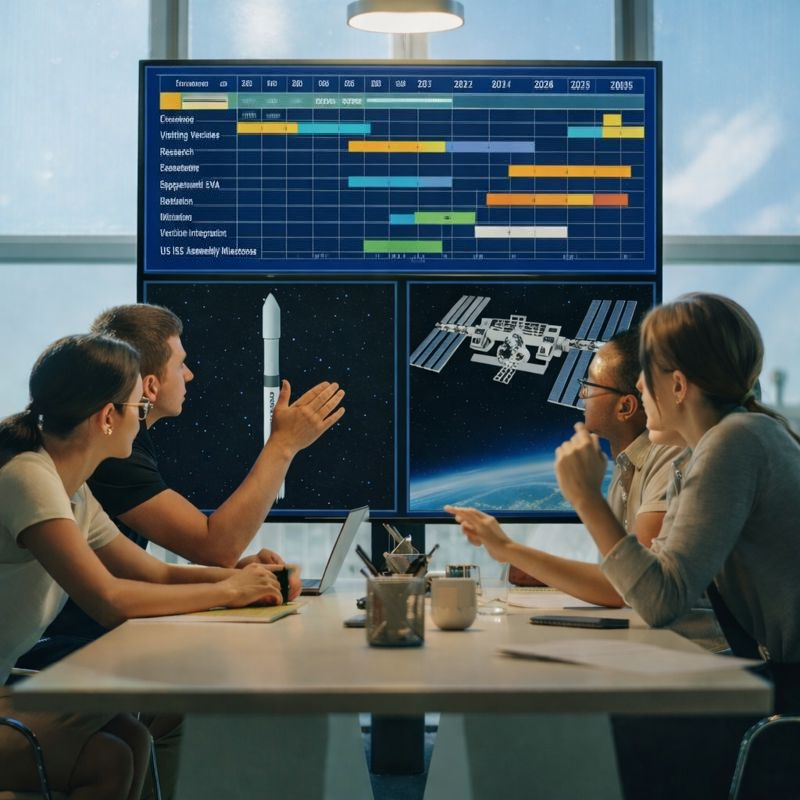
PROGRAM MANAGEMENT - Manage customer contracts and ensure successful alignment with mission execution. Manage entire PAM lifecycle through all mission phases, stakeholder engagement, governance, risk management, and resource allocation.
MISSION INTEGRATION - Support and manage pre-mission planning phases & integration elements (launch services, NASA requirements, DRDs, CHiTS, MCC, etc.). Manage contracted mission support services, coordinating across transportation provider, vendors, and destination.
CREW - CX | Training | Health
CUSTOMER EXPERIENCE - From contract through splashdown, WTP ensures customers achieve their objectives with low friction, complete confidence, and a consistently smooth, safe experience. Manage pre-mission day-to-day crew logistics and operations.
TRAINING - Oversee, manage, automate, or streamline PA astronaut training and logistics. Additionally, WTP offers proprietary on-obit mission performance training for maximizing productivity & ROI in orbit.
CREW HEALTH - Expert medical guidance and support through the full mission life-cycle. Provide customer heath support during training, physical preparation, quarantine, mission operations, and post-mission recovery.
ORBIT - Planning | On-Orbit Crew Ops Development
MISSION PLANNING - Strategize, plan, and prioritize your customer's on-orbit experience. Don't forget, the time spent on orbit is the primary reason countries are allocating national funds to PAMs. Develop, plan, and optimize onboard crew activities: science, outreach, media, health, and daily ops. Coordinate activities, priorities, and ops product development with customer teams. to meet expectations and ensure total mission success.
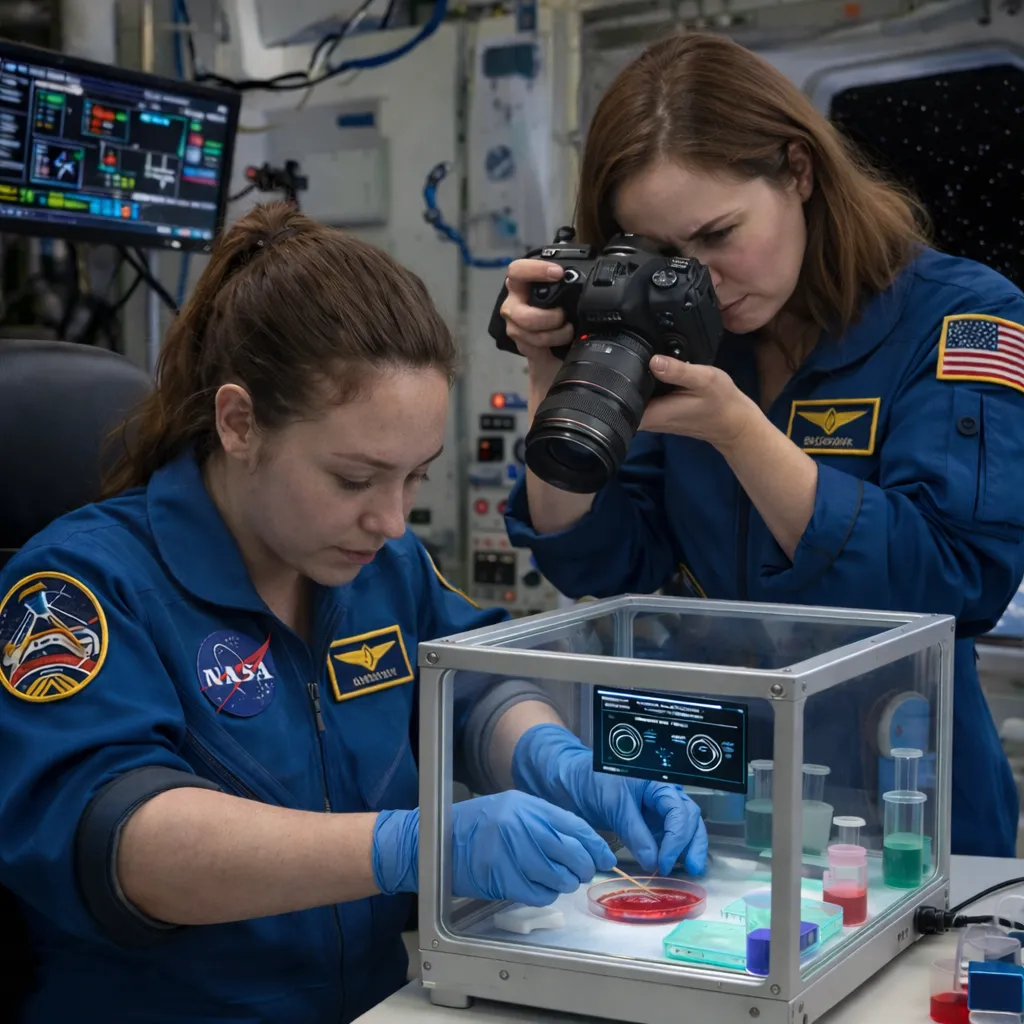
SCIENTIFIC RESEARCH OPS DESIGN - Enable customer-centric ISS science payload operations through unique con-ops: strategize, design, coordinate, and manage mission sciene that will produce returning customers.
ON-ORBIT MEDIA & OUTREACH DEVELOPMENT- Strategize, coordinate, and manage all on-orbit outreach and media. Work with orbital streaming media service providers, customer teams, company comms, and media outlets. Coordinate training for media end users, console teams, and company communications. Coordinate Event Summary Message creation and script development for live and recorded events with customer teams.
COMMERCIAL ACTIVITIES - Navigating you through NASA's commercial activities requirements, the CAF process, and development of supporting documentation to enable the success of your commercial partners and commercial obligations.
IT - MCC | Payload Operations Center
MCC DESIGN & DEVLOPMENT - Provide expert consulting on strategy, development, and buildout of mission-critical ground support infrastructure.
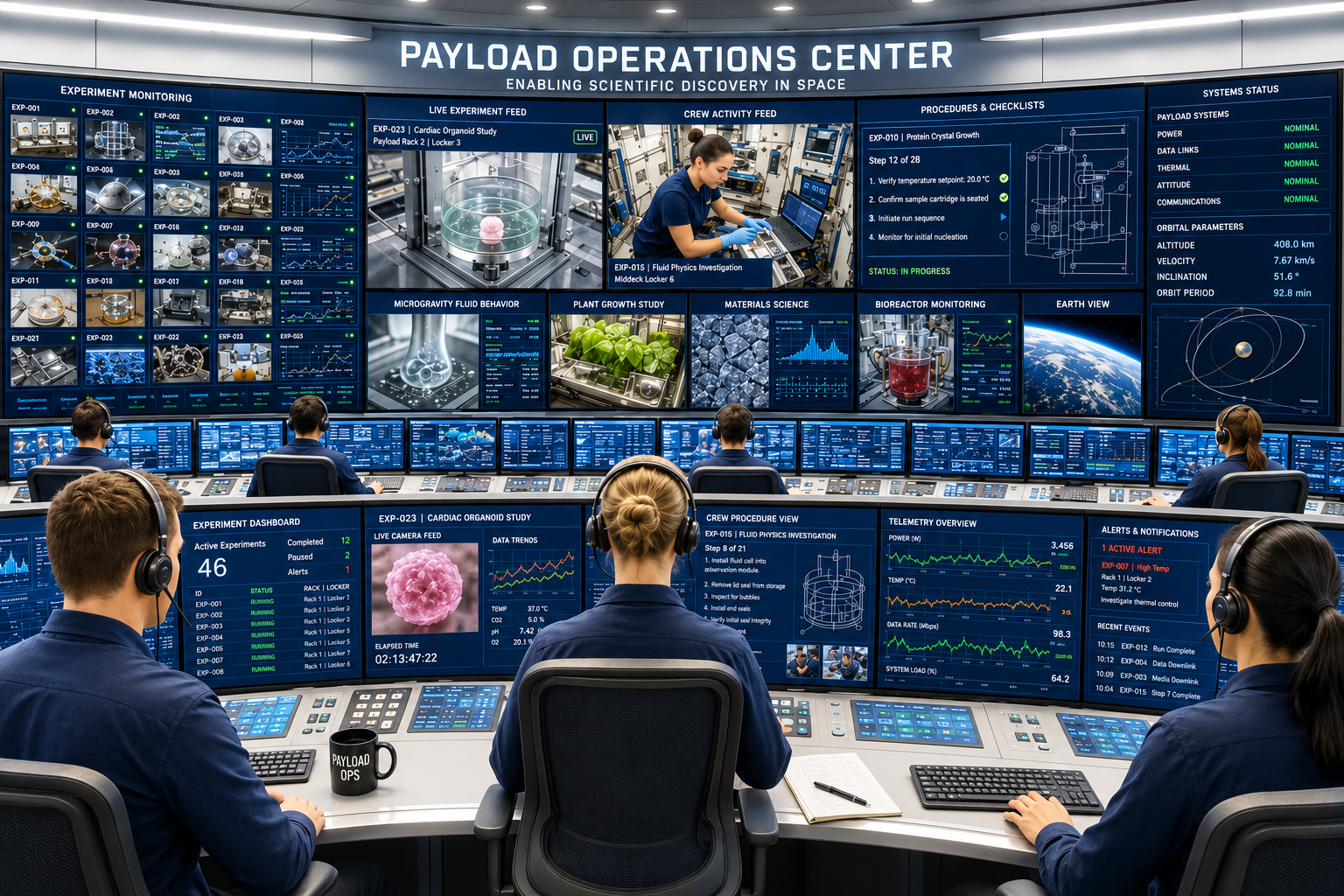
PAYLOAD OPERATIONS CENTER DEVELOPMENT - Establish and buildout POIC telescience capabilities for research customers and PI/PD teams to create their own certified Payload Operations Centers.

Interested in WTP services?
Connect with WTP to discuss your organization's objectives for today's commercial missions or for the emerging post-ISS era.
Frequently Asked Questions
What is a private astronaut mission (PAM)?
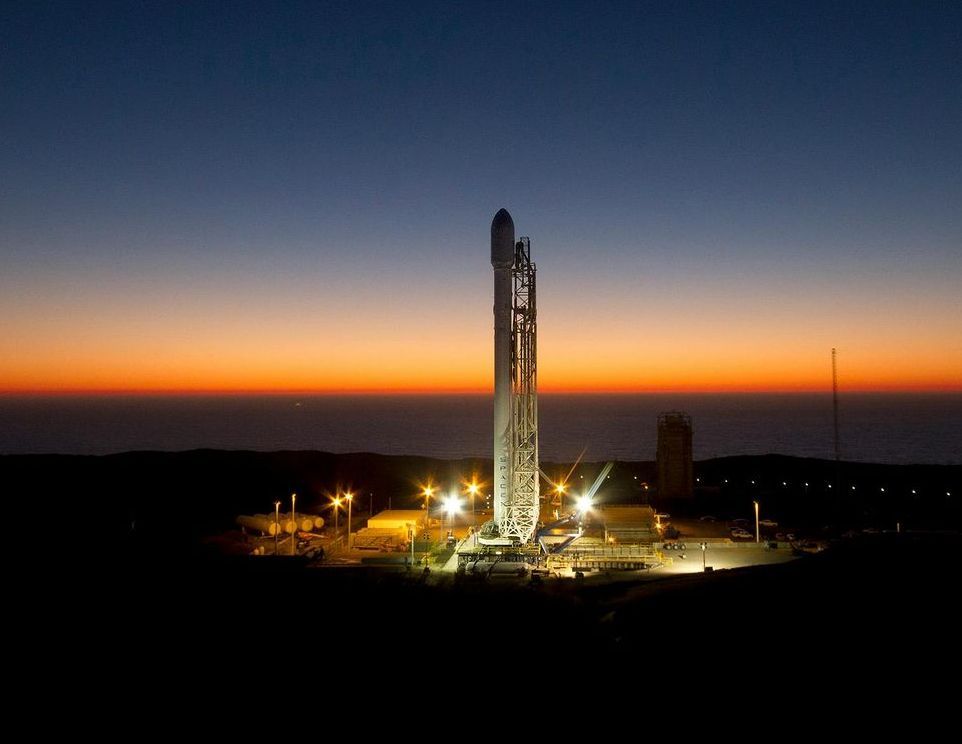
A Private Astronaut Mission (PAM) provides sovereign nations, organizations, researchers, and private individuals with access to commercial human spaceflight in low Earth orbit (LEO). Depending on mission architecture, destinations may include the International Space Station (ISS), emerging Commercial LEO Destinations (CLDs), or other commercial orbital platforms.
Today, access to ISS Private Astronaut Missions remains limited through a small number of NASA-managed opportunities. As the commercial space industry evolves beyond the ISS, new destinations and mission architectures will expand access to a broader range of customers and objectives.
WTP supports customers across both markets—providing independent mission representation and services for today's commercial missions while developing WTP-1, our independently led commercial human spaceflight mission designed for the post-ISS era. Regardless of destination, WTP remains focused on delivering purpose-driven missions that advance science, technology, education, public outreach, and national objectives.
Who can participate in these missions?

Our private astronaut missions are designed for both soverign nation space program astronauts and private individuals who meet specific health and fitness criteria. Participants must undergo a thorough medical evaluation and training to ensure they are prepared for the mission.
What training is required before the mission?
Participants will undergo comprehensive training that includes orbital destination protocols, transport spacecraft operations, science payload operations, daily station operations, and extreme environment sinulations. This training is essential to ensure a safe and successful experience in space.
What is the post-ISS Artemis era?
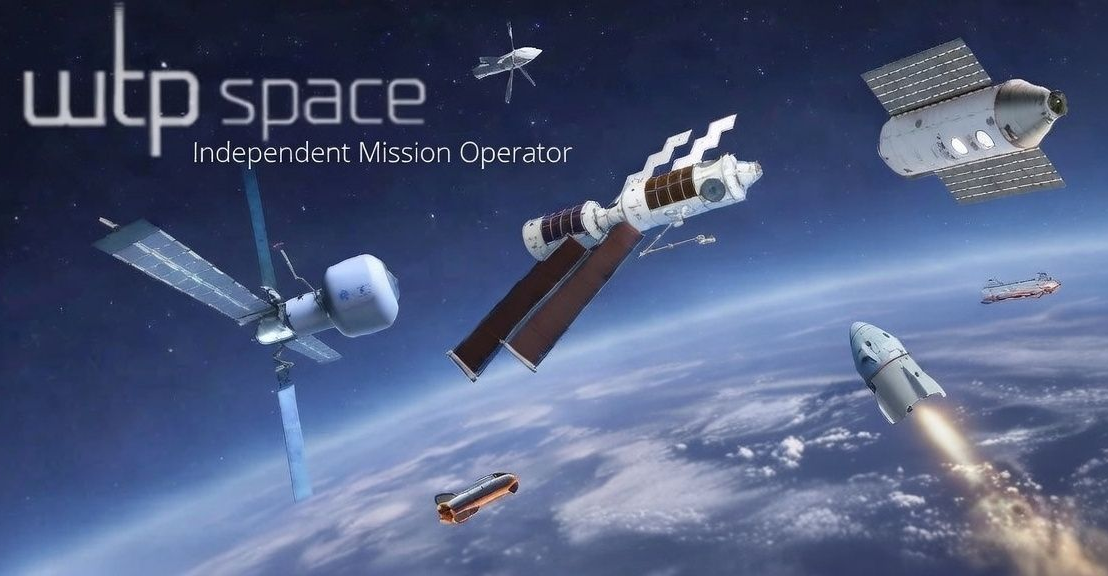
As commercial human spaceflight expands beyond the ISS into a multi-provider ecosystem, customers will no longer interact with a single government program or a single commercial company. They will navigate multiple transportation systems, commercial destinations, science providers, training organizations, operational requirements, and mission architectures. An Independent Mission Operator (IMO) exists to integrate those elements into a single, customer-focused mission while remaining independent of any one provider. This gives customers greater flexibility, unbiased representation, and access to the commercial solution best aligned with their objectives, while allowing transportation providers and commercial destinations to focus on what they do best. The IMO becomes the connective layer that transforms a fragmented commercial marketplace into a seamless mission experience.
Why are Private Astronaut Missions scarce? Can the market scale in the post-ISS Artemis era?
Scarcity vs. Market Opportunity:
Today's ISS Private Astronaut Missions represent a limited, NASA-managed access model with a small number flight opportunities each year at a very steep cost.
As commercial destinations emerge, access to low Earth orbit will expand beyond a single government-led framework. WTP's Independent Mission Operator (IMO) model enables customers to participate across multiple commercial platforms, transportation systems, and mission architectures, creating greater flexibility, more customer choice, lower costs, and long-term market resilience.
The IMO model enabled WTP-1, a new mission architecture and new opportunity for customers interested in private astronaut missions.
Scaling the LEO Economy:
The future of commercial human spaceflight depends on more than new destinations—it requires independent organizations capable of integrating customers, transportation, orbital platforms, science, and operations.
WTP's Independent Mission Operator model provides that connective layer that transforms a fragmented commercial marketplace into a seamless mission experience, supporting today's missions while enabling the next generation of commercial orbital opportunities, such as WTP-1.
Why is the IMO model important?
As commercial human spaceflight expands beyond the ISS into a multi-provider ecosystem, customers will no longer interact with a single government program or a single commercial company. They will navigate multiple transportation systems, commercial destinations, science providers, training organizations, operational requirements, and mission architectures. An Independent Mission Operator (IMO) exists to integrate those elements into a single, customer-focused mission while remaining independent of any one provider. This gives customers greater flexibility, unbiased representation, and access to the commercial solution best aligned with their objectives, while allowing transportation providers and commercial destinations to focus on what they do best. The IMO becomes the connective layer that transforms a fragmented commercial marketplace into a seamless mission experience.
The transition from the International Space Station to a commercially led low Earth orbit economy represents one of the most significant changes in human spaceflight. As demand for commercial missions continues to grow—from sovereign astronaut programs and scientific research to technology demonstrations and media—customers will need independent, experienced organizations capable of navigating an increasingly diverse commercial marketplace.
Today, access to commercial human spaceflight remains limited, with a small number of NASA-managed Private Astronaut Mission (PAM) opportunities to the ISS. As new commercial destinations enter service, access will expand beyond a single government-led framework to a broader ecosystem of transportation providers, orbital platforms, and mission architectures.
The Independent Mission Operator (IMO) provides the connective layer across that ecosystem. Rather than being tied to a single destination or transportation provider, an IMO works across multiple commercial platforms and vehicles, giving customers greater flexibility, broader access, and the ability to select the solution best aligned with their mission objectives.
WTP builds upon the proven operational model established during the earliest commercial astronaut missions while extending that expertise into the post-ISS era. By providing independent mission leadership, customer representation, planning, training, science integration, and mission execution, WTP helps bridge today's commercial human spaceflight market with tomorrow's commercial orbital economy.
A thriving commercial space economy requires more than transportation systems and orbital destinations. It also requires independent organizations capable of integrating customers, industry partners, and mission operations into a seamless experience. The Independent Mission Operator is that connective layer, helping ensure commercial human spaceflight remains accessible, flexible, and sustainable as the industry continues to evolve.
Does WTP use AI & AI tools?

WTP uses a range of AI tools and agents to maintain a lean team and to optimize tasks, processes, and operations.